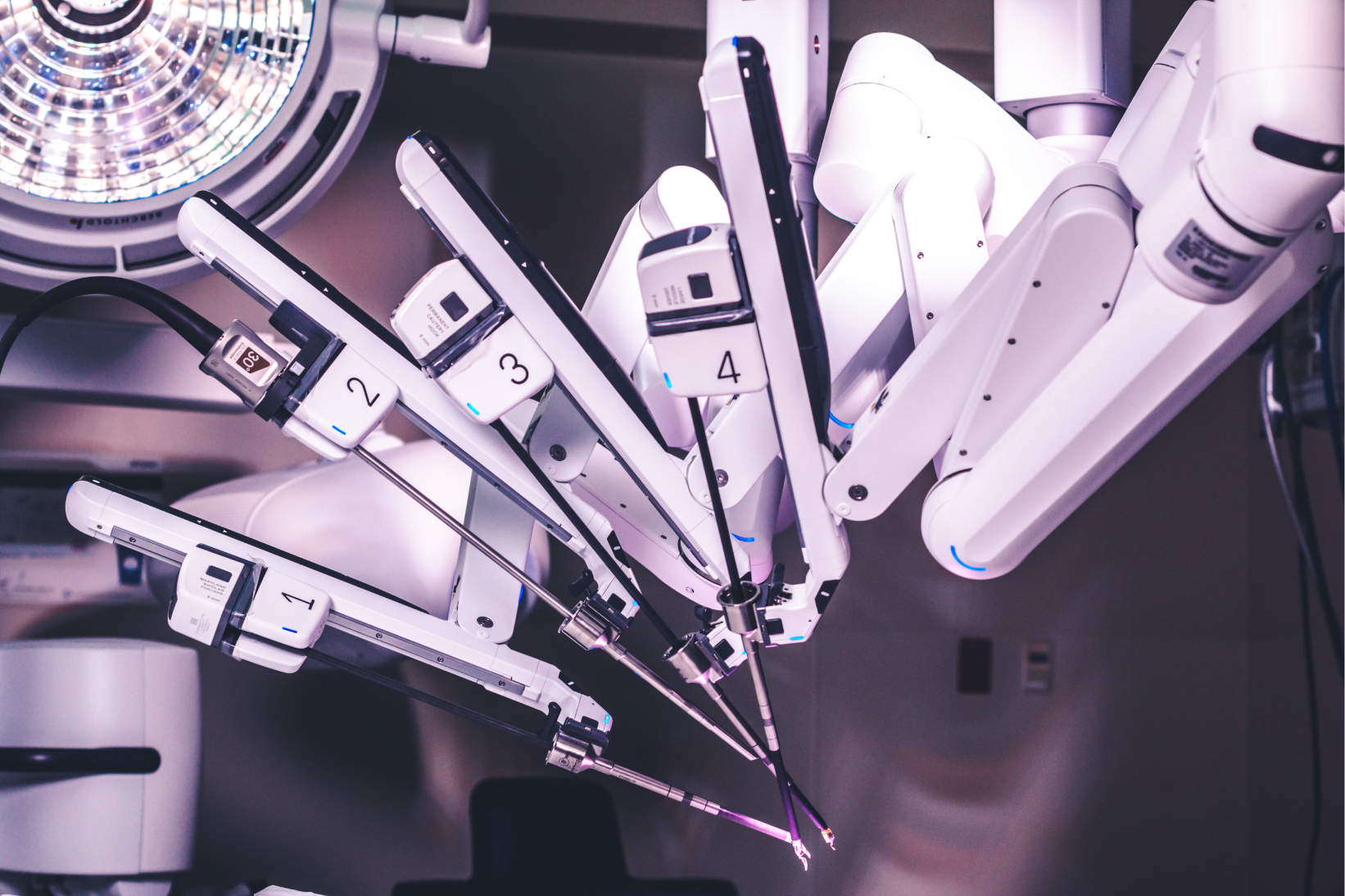
Robotic surgery is a form of minimally invasive surgery in which a surgeon uses a computer-assisted robotic system to perform precise surgical movements through small incisions.
Key Points to Understand
The robot does not operate on its own
The surgeon is fully in control at all times
The system translates the surgeon’s hand movements into highly precise, scaled motions
Robotic surgery
Benefits for Patients
Compared to traditional open surgery, robotic surgery often offers:
1
Robotic-assisted, minimally invasive surgery uses smaller incisions for less tissue disruption and more cosmetic results.
2
Patients often have less pain and reduced bloss loss with robotic-assisted surgery compared with traditional open surgery.
3
Minimally invasive robotic surgery may lower surgical-site infection risk by limiting incision size and exposure.
4
Robotic-assisted procedures can mean shorter hospital stays and a smoother postoperative course.
5
Many patients return to normal activities sooner after minimally invasive robotic-assisted surgery.
6
Robotic-assisted surgery provides enhanced precision and control, especially in complex, delicate procedures.
Robotic surgery is commonly used in general surgery, bariatric surgery, urology, gynecology, colorectal surgery, hernia repair, reflux surgery, and oncology.
Core Components of Robotic Surgery
Surgeon Console – where the surgeon sits and controls the instruments
Robotic Arms – hold surgical instruments and a camera
High-Definition 3D Camera – provides magnified views of the surgical field
What Makes Robotic Surgery Different From Laparoscopic Surgery?
Feature
Laparoscopic Surgery
Robotic Surgery
Instrument Movement
Rigid
Wristed, highly flexible
Visualization
2D camera
3D high-definition
Precision
High
Extremely high
Surgeon Ergonomics
Standing
Seated, ergonomic
Complex Procedures
More difficult
More controlled
Common Uses of Laparoscopic Surgery
1
Laparoscopic bariatric surgery supports weight loss with smaller incisions and a minimally invasive approach.
2
Laparoscopic hernia repair offers a minimally invasive option that can reduce recovery time and scarring.
3
Laparoscopic cholecystectomy is a common minimally invasive procedure for gallbladder removal with faster recovery.
4
Laparoscopic anti-reflux and hiatal hernia surgery can relieve GERD symptoms using minimally invasive technique.
5
Laparoscopic appendectomy is a standard minimally invasive treatment for acute appendicitis.
6
Laparoscopic surgery is widely used across general surgery for many procedures that benefit from a minimally invasive approach.
How Surgeons Use Robotic Technology
Why Robotic Surgery Matters Today
Robotic surgery enhances the surgeon’s skill — it does not replace it.
Surgeons still:
Plan the procedure
Control every movement
Make all medical decisions
The robotic system simply allows them to operate with:
Greater accuracy
Better visualization
More refined control in tight or delicate areas
Robotic surgery has changed modern surgical care by allowing:
Minimally invasive approaches to complex operations
Safer surgery for patients with higher risk
Faster return to daily life
For many patients, robotic surgery combines the effectiveness of open surgery with the recovery benefits of minimally invasive techniques.
WhatourPatientsHavetoSay
Randy & Casi
Lily
Gedy
"Do it, but only if you're ready to commit to the process. It is a big change, and it's important to understand that this is a lifelong commitment."
“I would do it all over again if I had to—and I only wish I had done it sooner.”
“Choosing Dr. González was one of the best decisions I have ever made.”
RoboticSurgeryFAQ
Is the robot performing the surgery on its own?
No. The robot never operates independently. Your surgeon remains in complete control of the robotic system throughout the entire procedure.
Am I a candidate for robotic surgery?
Many patients are candidates for robotic surgery, but eligibility depends on your medical history, condition and overall health. Dr. Gonzalez will evaluate your specific situation and recommend the most appropriate treatment option.
Is robotic surgery safe?
Robotic Surgery has been safely performed worldwide for many years and is supported by extensive clinical research. As with any surgical procedure, risk exist, which will be discussed during your consultation.
How long is recovery after robotic surgery?
Recovery times vary depending on the procedure and individual patient. However, many patients experience less pain and return to normal activities sooner compared to traditional open surgery.
Will I have visible scars?
Multiport robotic surgery Scars are small 8mm (1/4 inch) in size. Robotic single port scars are 25 mm (1 inch) and are hidden the umbilicus (belly button).
Is robotic surgery covered by insurance?
Most insurance plans cover medically necessary robotic surgical procedures similarly to traditional surgery. Our office can help verify your specific benefits and coverage.